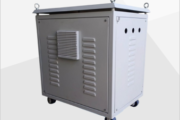


Power issues in a hospital are not just annoying. They can be dangerous. One sudden surge and machines like ventilators or MRI scanners might stop working. And when lives depend on those machines, there’s no room for error. That’s where a servo stabilizer for hospitals use becomes important.
It’s not just a device – it is a safety layer between your hospital and unstable power. Let’s look at how it works and why your hospital should care.
Why Hospitals Struggle with Power Surges
Imagine this. A patient is in the middle of a surgery. Suddenly, there is a voltage spike. The surgical light flickers. The machine monitoring the patient beeps oddly. Everyone in the room panics.
Surges like that can come from many sources. Lightning strikes. Power grid switching. Even the hospital’s equipment starting up can cause a sudden jump in voltage. And when that happens, sensitive devices can get damaged – sometimes beyond repair.
Even something as simple as turning on an air conditioning unit in one section of the hospital can send ripples across the system. Voltage rises or dips in one area can affect delicate equipment connected elsewhere. That’s because many hospital circuits are interconnected. This puts everything from CT machines to oxygen concentrators at risk.
Equipment like:
- MRI and CT machines
- Ventilators
- ECG monitors
- Blood analyzers
- Dialysis machines
They’re all vulnerable.
Also, read Servo Voltage Stabilizer For Medical And Hospital Equipment.
How a Servo Stabilizer Works (Without the Tech Talk)
A servo stabilizer for hospitals is like a bodyguard for your machines. It constantly checks the incoming power and fixes it before it reaches your equipment.
Think of it like noise-cancelling headphones. It listens to the voltage and cancels out the bad parts. If the voltage goes too high or too low, it adjusts it in real-time.
There’s a motor inside that moves based on the voltage level. If there’s a spike, it quickly brings the level down. If there’s a dip, it brings it back up.
This all happens in milliseconds. That’s faster than the blink of an eye. And that’s important because sensitive machines don’t wait. They react instantly to power shifts. That fast response is why servo stabilizers are preferred in medical environments over regular stabilizers.
It doesn’t wait. It reacts fast. That’s why it’s a good fit for hospitals, where consistency matters.
What Makes a Servo Stabilizer for Hospital Use So Useful?
- Keeps voltage stable—even during storms or generator changeovers
- Protects expensive machines from burning out
- Reduces maintenance costs
- Works silently in the background
- Supports 24/7 operations, especially in ICUs and labs
Many hospitals install servo stabilizers near their operation theatres and critical care areas. These zones are too sensitive to risk with even momentary power issues. With a stabilizer in place, even when there’s a sudden voltage spike from the main line, the machines in these areas continue working smoothly.
You don’t have to think about it every day. But it’s always there, protecting everything connected to it.
Where Rameshwar Power Control Fits In
We have worked with hospitals. We know how critical their power supply is. That’s why Rameshwar Power Control builds stabilizers with hospital-grade precision.
Our range includes:
- 3 Phase Air Cooled Servo Voltage Stabilizer
- 3 Phase Oil Cooled Servo Voltage Stabilizer
- 1 Phase Servo Voltage Stabilizer
- IGBT Static Voltage Stabilizer
- Isolation Transformer
Each product is tailored for specific load conditions and hospital environments. For instance, air-cooled models are better for cleaner environments with proper ventilation. While oil-cooled models handle high-load areas with ease. IGBT static stabilizers offer even faster response times, suitable for imaging labs or surgical systems. Isolation transformers are often used in ICU and NICU setups to prevent electrical interference.
These things work. Quietly. Reliable.
How to Know If You Need One
Ask yourself:
- Do machines in your hospital restart randomly?
- Do you often call for equipment repairs due to “electrical issues”?
- Have you faced power cuts or surges during critical procedures?
Also, look at the service records of your devices. Are most failures marked as “power-related” or “PCB burnout”? That’s a red flag. Another clue is generator usage. If you use diesel generators often, switching between main power and backup can cause surges. A servo stabilizer smooths that transition automatically.
If the answer is yes to any of these, you probably need a servo stabilizer for hospital safety.
Wrapping It Up
Hospitals are complex systems. And electricity runs through every part of them. You wouldn’t take a chance on faulty wires. So why take chances with unstable voltage?
A servo stabilizer for the hospital is not just a piece of hardware. It’s peace of mind. It is making sure that when a doctor presses a button, the machine responds every single time.
If you are not sure what your hospital needs, talk to us at Rameshwar Power Control. We can help you figure it out. No pressure. Just real solutions.
📞 Call us: +91 98248 12053 || +91 88666 65036
📩 Email us your load sheet: rameshwar.electricals@yahoo.com
🔧 Or just fill out the form – we will guide you from there.