


Introduction
Oil-Cooled Servo Voltage Stabilizers are the unsung heroes of Indian factories. Every day, they fight against voltage swings that could bring entire production lines to a halt. In India, power isn’t always steady. There are fluctuations, spikes, and sudden drops. For a home appliance, this might just mean a flicker. For a factory machine, it can mean burnt motors, damaged PLCs, or hours of downtime.
That’s why industries trust stabilizers. But here’s the interesting part: not all stabilizers work the same way. And when the choice is between air-cooled and oil-cooled models, most heavy industries in India prefer oil-cooled. Why? That’s what we’ll break down in this blog.
What Are Oil-Cooled Servo Voltage Stabilizers?
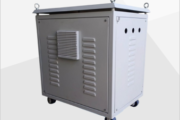
In simple terms, these stabilizers regulate voltage by using a servo motor mechanism along with a transformer. The oil part? That’s for cooling. When the transformer works, it generates heat. A lot of it. Instead of blowing air with fans like air-cooled stabilizers, these units use oil to absorb and dissipate heat.
Think of it like this: imagine two cars on a long highway drive. One uses just air cooling, the other uses a radiator with coolant. Which car survives a 500 km summer trip in Rajasthan without breaking down? The one with coolant. Oil does the same job here—keeps the system cool, even under pressure.
Why Indian Industries Prefer Oil-Cooled Servo Voltage Stabilizers
Indian industries operate in some of the harshest conditions. High ambient temperatures. Dust everywhere. Machines running round the clock. And electricity that doesn’t always play nice. Under these conditions, oil-cooled stabilizers offer benefits that air-cooled models can’t match.
Better Heat Management
Voltage regulation is not a cool job – literally. The stabilizer handles huge loads, making heat its biggest enemy. Air-cooled units use fans to push away hot air. But in a factory where the ambient temperature already touches 40°C, fans struggle. The heat lingers. Components age faster.
Oil-cooled systems work differently. Oil absorbs the heat and carries it away from critical parts. This reduces thermal stress on the transformer and servo motor. Result? Longer life. Stable performance.
Here’s a real-world picture: imagine you are in a small workshop in Gujarat in May. The temperature is 42°C outside. Inside, the furnace is on. Machines are humming. The air feels heavy. Now add a stabilizer, trying to keep cool with just a fan. That fan is blowing hot air on hotter components. It won’t last. But a stabilizer with oil cooling? It stays calm. The oil bath is like an ice pack for a fevered athlete.
Longer Life in Harsh Conditions
Dust, oil mist, metal particles – industrial floors are never clean. Air-cooled stabilizers pull air through fans to cool down. But along with air, they pull in dust. This dust coats the components, clogs the cooling path, and causes failure.
Oil-cooled stabilizers are sealed systems. No fan sucking in dust. No open vents. The oil tank is closed, protecting the heart of the system. Even in environments like rolling mills or textile plants, where lint and fiber float around, these units work without choking.
One of our clients in a forging plant shared a story. Their old air-cooled stabilizers needed cleaning every month. Downtime was unavoidable. After switching to oil-cooled, they went six months without touching the unit. That’s the difference.
Handles Heavy Loads Smoothly
Indian industries love heavy-duty machines – presses, CNC machining centers, welding equipment. These machines don’t just consume power; they gulp it in big surges. Every time a motor starts, there’s a voltage dip. Every time a welding arc strikes, there’s a spike.
Oil-cooled stabilizers handle these swings better. The oil keeps the transformer from overheating during these sudden load changes. The servo mechanism works fast without thermal stress. That means your production line does not stop. Your motors do not trip.
A plastic molding plant once told us, “We could not run three machines together without voltage dipping before. Now we run five, no problem.” That is what oil cooling brings – confidence in uptime.
When Should You Choose Oil-Cooled Servo Voltage Stabilizers?
Not every business needs oil cooling. If you run a small workshop with light machines and a clean environment, an air-cooled unit is enough. But if your setup looks like this:
- Ambient temperature above 35°C
- Machines running 24×7
- Heavy motor loads
- Dust, fumes, or oil mist in the air
…then an oil-cooled stabilizer is not optional. It’s essential.
Think of it like footwear. For a quick walk in the park, slippers work. For a trek in the Himalayas, you need boots. Oil cooling is that heavy-duty boot for your electrical system.
Applications in Indian Industries
Here’s where oil-cooled stabilizers are most common:
- Steel and Foundries: Arc furnaces and induction heaters need a stable voltage during power surges.
- Textile Mills: Continuous load changes from spinning and weaving machines.
- Pharmaceutical Plants: Sensitive machines where even small voltage changes can ruin a batch.
- Plastic Injection Molding: High starting currents from hydraulic motors.
- Printing Presses: Protects precision equipment and PLCs from sudden drops.
Wherever downtime costs lakhs per hour, these stabilizers are a safety net.
Maintenance Tips for Longer Life
Oil-cooled units last long, but only if you care for them. Here are four simple tips:
- Check Oil Level: Low oil means poor cooling. Top up when needed.
- Watch for Leaks: Oil leaks reduce efficiency and can damage components.
- Keep Terminals Clean: Dust can still settle on terminals; clean them regularly.
- Monitor Heat: Use an infrared thermometer during peak load to ensure oil is doing its job.
Follow these, and your stabilizer will serve for years.
Cost vs. Benefit
Yes, oil-cooled stabilizers cost more upfront. But let’s put it in perspective. One motor failure in a CNC machine can cost ₹2–3 lakh. A day of downtime in a steel plant? Several lakhs more. If a stabilizer prevents even one such incident, it’s worth the investment.
Plus, these units need less frequent servicing compared to air-cooled ones. That means fewer stoppages and lower maintenance bills. It’s like buying a strong steel bridge instead of a wooden one. Higher cost upfront, but it lasts decades.
Conclusion
Oil-Cooled Servo Voltage Stabilizers are not just another piece of equipment. For many Indian industries, they are the backbone of uninterrupted production. They handle heat, dust, and heavy loads where air-cooled models fail. If uptime matters – and in manufacturing, it always does—oil-cooled is the right choice.
Because in industrial production, stable power is not a luxury. It is survival.
Looking for a trusted solution? Rameshwar Power Control provides custom-built stabilizers designed for your industry’s needs.