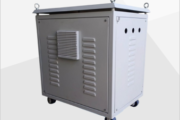


Voltage drop problems and solutions are critical to understanding if you are running any kind of industrial operation. In a factory, steady electricity is like oxygen, its invisible, but vital. When it’s stable, machines run smoothly, production stays consistent, and delivery deadlines are met. But when voltage suddenly drops, things can go wrong fast.
Imagine this: your factory is operating at full capacity. Suddenly, one of your main machines breaks. After investigation, the problem is clear – a voltage drop. You not only lost precious production time but also wasted raw materials. It’s frustrating, costly, and unfortunately, far too common.
At Rameshwar Power Control, we have worked closely with industries across sectors to prevent exactly this kind of scenario. With years of experience, we have learned that addressing voltage drop problems and solutions. This is not just about fixing power – it’s about protecting productivity, profitability, and peace of mind.
What is Voltage Drop, Really?
Voltage drop happens when electricity “loses strength” while traveling from the power source to your equipment. Think of it like water running through a long pipe. The farther it travels, the more pressure it loses along the way. Similarly, if your wires are too long, too thin, or have poor connections, the voltage at the machine end drops. That can damage sensitive equipment or stop machines completely.
In homes, this might just mean flickering lights. But in industries, it means breakdowns, errors, and big losses.
Top Voltage Drop Problems and Solutions
Common Causes of Voltage Drop in Industries
Drawing from our decades of experience in voltage management. We have identified a few common causes behind industrial voltage drops:
- Long Cable Runs: In larger plants, machines are often located far from the main supply. Longer cables naturally increase resistance.
- Undersized Wiring: If wires are not selected based on load capacity. They heat up and cause voltage to drop during peak current flow.
- High Inrush Loads: Heavy machinery – such as compressors or CNC machines – draws large currents at startup, leading to short-term voltage dips.
- Loose or Corroded Connections: Over time, terminals and connectors degrade. This increases resistance at joints, leading to further losses.
- Grid Fluctuations: In many industrial zones, inconsistent grid supply from electricity boards leads to voltage dips during high-demand periods.
When such issues compound, production efficiency plummets, maintenance costs soar, and the safety of systems is compromised.
What Are the Best Solutions to Voltage Drop?
Over the years, we’ve developed and deployed various technologies to counter voltage drops. Each solution has its benefits, and often, a combination of devices delivers the best results.
1. Servo Voltage Stabilizers
These are electromechanical devices designed to regulate voltage within a narrow range. By adjusting the input using a servo motor and buck-boost transformer, they maintain a steady output voltage. Even if the incoming voltage fluctuates.
✅ Ideal For:
- Textile units
- Plastic molding plants
- General Manufacturing
✅ Advantages:
- Cost-effective
- Good for wide voltage swings
- Proven technology with low maintenance
2. IGBT Static Voltage Stabilizers
These use solid-state Insulated Gate Bipolar Transistors (IGBTs) to rapidly correct voltage in real time. Unlike servo models, they have no moving parts, which means near-zero maintenance and ultra-fast response times.
✅ Ideal For:
- Printing & packaging machines
- Hospitals and labs
- Data centers
✅ Advantages:
- Millisecond-level correction
- Silent operation
- Superior precision
3. Isolation Transformers
These do not regulate voltage, but they isolate sensitive loads from incoming power supply issues – especially spikes, noise, and harmonics.
They are excellent when used in tandem with stabilizers.
✅ Ideal For:
- CNC machines
- Robotics
- Medical devices
✅ Advantages:
- Eliminates electrical noise
- Adds safety through galvanic isolation
- Enhances the performance of stabilizers
How to Choose the Right Solution?
When it comes to fixing voltage drop problems, there’s no one-size-fits-all. At Rameshwar Power Control, we conduct site-specific audits to understand:
- The load type and its sensitivity
- Distance between the source and load
- Frequency and severity of voltage fluctuation
- Nature of equipment (resistive, inductive, sensitive)
As per the assessment, we design a tailored voltage stabilization system. Like, which suite better is servo voltage stabilizer, Isolation Transformer, or IGBT Static voltage stabilizer?
Why Industries Rely on Rameshwar Power Control
We are not just manufacturers. We are partners in your power reliability journey.
With over two decades of experience and a dedicated R&D unit, Rameshwar Power Control has been serving industries across India. With a commitment to precision engineering and electrical safety. We serve our products from MSMEs to large-scale plants. And our solutions have proven reliable under extreme conditions.
What sets us apart?
- In-house design and testing
- Use of ISI-marked materials
- Quick support turnaround
- Custom builds from 5 kVA to 5,000 kVA
When you work with us, you are not just buying a product – you are investing in stability.
Final Thoughts:
Don’t Let Voltage Drop Kill Your Productivity
Voltage drop may seem like a small issue at first – until it causes a machine to stop or a batch of production to fail. By identifying the right voltage drop problems and solutions, you are not just fixing a technical issue — you are protecting your business.
Whether you are running heavy equipment, delicate machines, or automated lines — power stability is important.
Let us help you take charge of your voltage challenges. So, you can focus on growing your business, not fixing it.
📞 Need help with your voltage problems?
Contact Rameshwar Power Control and get a free quote and get the right solution today.