
Introduction: Why This Transformer Matters
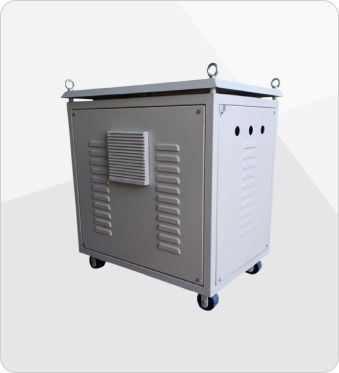
The solar auxiliary transformer for power plant is a small, quiet component that keeps the entire system running. Everyone focuses on the solar panels and the main power transformers. They generate the revenue. But if the auxiliary power fails, the entire plant trips. It is like the emergency brake on a train. It is small, but if it fails, nothing moves.
I have been in the power equipment manufacturing business for several years. We often help plants dealing with voltage issues downstream from the main supply. For example, critical loads like medical equipment in hospitals or sensitive controls in factories need clean, stable power. This is where tools like a servo voltage stabilizer or a servo stabilizer for hospitals become essential.
Even the best auxiliary transformer can only do so much if the grid voltage is shaky. The newest trends among servo voltage stabilizer manufacturers in India reflect this increasing need for precision.
This guide will focus on the specifications that truly matter for a modern utility-scale solar facility. We will explain how to choose a solar auxiliary transformer for a power plant that ensures maximum uptime, addressing the new industry trends like 800V AC inputs and advanced diagnostics.
Technical Deep Dive: The New Standards for Solar Auxiliary Transformer
The technology in solar plants is always changing. Today, we are seeing a push for higher voltages, especially on the AC collection side. This changes what you need from an auxiliary transformer.
The 800V Challenge: Winding Design for High-Efficiency Inverters
A lot of new utility-scale plants are using inverters that output AC at 800 Volts. This is good for efficiency and lowers cable costs. But it means your auxiliary transformer has to adapt.
- Crucial Specification: The Primary (HV) Winding must be designed for 800 Volts (or your specific LV bus voltage).
- The Risk of Generic Design: Using an off-the-shelf transformer designed for a standard 11 kV or 33 kV primary and trying to feed it a lower voltage like 800V introduces unnecessary complexity. You need a dedicated unit.
- Engineering Focus: The windings must handle the full load current at this lower voltage without excessive heating. We design the copper/aluminum windings for the Solar Auxiliary Transformer with higher cross-sectional areas to manage this. It is a subtle difference, but it means the difference between a unit that runs cool for 20 years and one that fails in five.
Winding Configuration: Why You Must Specify Dyn11 for Your Solar Auxiliary Transformer
When we choose a transformer, the vector group is essential. For a solar auxiliary transformer, the industry standard and what we always recommend is Dyn11.
- What Dyn11 Means Simply: The Delta (D) connection on the primary absorbs harmonic currents from the inverters. This cleans up the power before it gets to the secondary side. The Star with Neutral (yn) on the secondary gives you the required four-wire system to power all the single-phase and three-phase loads (415/240V).
- The Need for Stability: Even after harmonic absorption, voltage stability is paramount for the loads. This is why many industrial clients use specialized power equipment. We, as Rameshwar Power Control, have seen firsthand that a reliable 415V supply needs robust cooling, whether it is an oil-cooled servo stabilizer for heavy-duty cycling or the increasingly popular air-cooled units for cleaner environments. The auxiliary transformer is the starting point for that 415V supply.
Sizing and kVA: Avoiding the Efficiency Trap
The kVA rating is simple: it is the power capacity. For most solar inverter stations, the auxiliary load requirement is usually modest, typically in the 10 kVA to 50 kVA range.
People often oversize these, thinking bigger is better. But an oversized transformer runs under-loaded most of the time. This means it operates at lower efficiency, wasting energy. This is similar to how clients choose stabilizers; they need to know how to choose the right voltage stabilizer for factory loads. Sizing it correctly is not just about cost. It is about performance. We offers optimized small kVA units designed for continuous duty at partial loads. Just like oil-cooled stabilizers are chosen for heavy-duty industrial environments, the cooling medium of this transformer must match its duty cycle.
Enhancing Uptime & Safety: Beyond Core Design
A transformer is more than just iron and wire. Modern features focused on diagnostics keep the maintenance team happy and the plant running.
DGA Readiness: The Predictive Edge
Dissolved Gas Analysis (DGA) is your transformer’s blood test. Gases like Hydrogen (H2) are created inside the oil when there is a fault.
- The Problem in Solar: Auxiliary transformers are small and non-critical assets, so operators often skip or delay DGA testing. But a small failure here can still cause a massive outage.
- Our Solution: Our units, even the small kVA ones, come DGA Ready. We install convenient, standard oil sampling ports.
- Expert Insight: DGA helps you detect issues like overheating, which is also the root cause of voltage drop problems, and solutions for industries – it creates resistance. If you have sensitive loads like a CNC machine, you need stable, clean power. This often means using an isolation device alongside stabilization. We have developed a complete servo stabilizer for CNC machines buyer’s checklist to guide clients.
Isolation and Protection
The Dyn11 connection provides isolation, which is a key benefit of a 3-phase isolation transformer. This isolation protects downstream loads from line-to-ground faults. For hyper-critical loads, like the electronics in packaging machines or CNC controllers, true galvanic isolation offers the ultimate protection against noise and surges, similar to how a servo stabilizer for hospitals protects against power surges but through magnetic separation. An industrial stabilizer handles voltage; an isolation transformer handles noise and separation. The benefits of using an isolation transformer for CNC machines are well-documented.
Choosing the Right Fluid: Safety and Environment
Traditionally, transformers use mineral oil. Now, you have better options.
- The Fire Safety Metaphor: Mineral oil is like gasoline; it burns easily. Natural ester fluid is like cooking oil; you have to work much harder to ignite it. Using Natural Ester Fluid (if applicable) significantly increases the fire safety margin, especially for transformers installed near inverter cabins.
Durability, Maintenance, and Real-World Application
A solar auxiliary transformer for power plant often sits outside, exposed to brutal weather. The construction must reflect this reality.
Sealed Tank Construction
The main tank is completely sealed and keeps oxygen and moisture out. I do not think you should settle for anything less in a hot, dusty environment. This extends the life of the insulation and the oil. We build equipment for tough industries, from textile machines that need consistent speed to pharmaceutical manufacturing where batch integrity is key. Every industry relies on a stable foundation.
Maintenance Philosophy
The best equipment requires minimal maintenance, but all equipment needs care. Just like we provide a servo voltage stabilizer maintenance checklist and guides on how to maintain air-cooled stabilizers. Our core business at Rameshwar Power Control is building reliability, whether it is for large industrial stabilizers or this critical transformer.
The biggest takeaway here is that whether the final load is a huge packaging machine on a production line (requiring a servo stabilizer for packaging machines), a hotel’s HVAC system (making a servo voltage stabilizer for hotels a good investment), or a single monitoring computer (protected by a single phase voltage stabilizer), that load is powered by the auxiliary transformer.
This simple component is the start of the plant’s essential services, and understanding the role of the solar auxiliary transformer for solar plants is the first step toward true plant resilience.
Conclusion: A Small Investment, A Massive Return
Choosing the right solar auxiliary transformer for power plant is not a complex task, but it requires attention to modern design details.
The key points to remember for your next solar project are:
1. Voltage: Primary winding designed for the new 800V standard.
2. Configuration: The Dyn11 vector group is mandatory for handling harmonics and providing a reliable grounded neutral.
3. Uptime: Specify DGA Readiness to shift your maintenance from reactive to predictive.
The failure of this small component – the solar auxiliary transformer for power plant – can stop a multi-million dollar plant for days. The small difference in cost between a generic unit and a robust, modern unit like the Solar Auxiliary Transformer series is nothing compared to the revenue lost from just one day of downtime.
Choose the one built for the long run.
Call to Action: Download the full technical specifications for the Solar Auxiliary Transformer series to ensure your next solar project is built for maximum uptime. Contact our engineering team at Rameshwar Power Control for a free consultation.