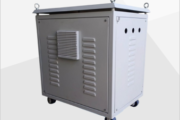


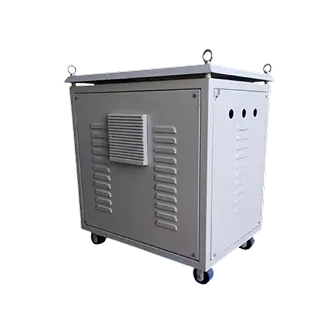
A Solar Auxiliary Transformer for Wind Park is one of those components that often stays in the background. You do not always see it. You do not always notice when it’s working. But the moment it fails, everything stops.
Wind turbines slow down. Control panels shut off. Cooling systems stop responding.
And the entire wind park stands still.
This blog is written for wind park project engineers, EPC teams, and maintenance heads who know that small failures can lead to big downtimes. Let’s start by understanding why auxiliary transformers matter, how they support internal power needs, and what makes a reliable one.
What is a Solar Auxiliary Transformer for Wind Park?
A Solar Auxiliary Transformer for Wind Park is used to step down incoming high voltage to a lower, usable level for internal loads within the wind turbine system.
Wind turbines generate power, but they also consume power to keep themselves running.
This consumption is for:
- Turbine control panels
- Monitoring and communication units
- Cooling fans
- Yaw motors
- Battery chargers
- Lighting inside turbine towers and control rooms
The auxiliary transformer ensures these loads always receive stable, safe, and isolated power, even when generation is low or during grid fluctuations.
Think of it like the nervous system of the wind turbine.
Even when the main muscles (rotor and generator) slow down, the nervous system must keep functioning. With this comparison in mind, let’s look at the transformer’s operational importance.
Role of Solar Auxiliary Transformer for Wind Park in Wind Turbine Operation
Now that we have covered what this transformer is and how it serves the wind turbine’s internal needs. Let’s look at its direct role in operation, especially under real-world wind park conditions.
In wind parks, environmental conditions are rarely friendly.
There is dust. There is moisture. Sometimes heat. Sometimes storms.
Turbines stand alone in open fields or on offshore platforms.
But the monitoring systems, sensors, control relays, and cooling equipment cannot stop.
This is where the auxiliary transformer becomes essential.
It protects the internal systems from:
- Sudden voltage drops
- Grid instability
- Harmonics
- Surge or lightning shock
- Load variations during turbine movement
If the auxiliary power goes unstable, even for a moment, the turbine may need manual reset or shutdown.
That means downtime. And downtime is expensive.
Why Reliability Matters More Than Anything
Wind parks are remote. Maintenance is not always immediate. Service teams may need hours to reach a site. So the transformer must be:
- Strong in insulation
- Stable during load swings
- Capable of handling heat and vibration
- Good at withstanding surge and transient shock
At Rameshwar Power Control, we have seen failures in field conditions when design was done only based on calculation, not based on environment.
We learned early that wind-side transformers cannot be treated like ordinary distribution transformers.
They must be engineered for endurance.
Key Technical Features That Matter
Here are the practical specifications that typically define a reliable auxiliary transformer for wind applications:
| Type | AUXILIARY TRANSFORMER |
|---|---|
| Rating | Upto 100kVA |
| Input Voltage | 800 / 415 / 230 / As per requirement |
| Output Voltage | As per requirement |
| Configuration | Three Phase |
| Cooling | Air / Oil |
| Frequency | 50/60 Hz |
| Insulation Class | F / H |
| Vector Group | Dyn11 or As per requirement |
| Core | CRGO |
| Operating / Ambient Temperature | 45 Degree |
We manufacture transformers as per IS/IEC safety and efficiency standards, ensuring long-term reliability with minimal service requirements.
If you want to understand voltage stability issues more deeply, you may refer to our article:
Top Voltage Drop Problems and Solutions for Industries
How Rameshwar Power Control Designs for Real Wind Park Conditions
We’ve worked across solar plants, wind farms, manufacturing units, hospitals, and CNC machine sectors.
Our experience is not theoretical; it comes from operating in the field with real customers and real site conditions.
We design our transformers to:
- Handle continuous vibration for nacelle or base-mounted environments.
- Withstand outdoor humidity, dust and coastal air.
- Maintain efficiency across long duty cycles.
- Offer safe isolation between control and power circuits.
We also provide testing, installation guidance, and long-term service support.
Our control panel manufacturing background helps us integrate transformers with broader power systems more effectively.
Selection Guide for Wind Park Engineers
Before choosing an auxiliary transformer, confirm the following:
1. Voltage Rating: Match with substation or turbine input voltage.
2. Load Requirement: Sum up internal power needs of monitoring, cooling, control circuits.
3. Environment: Temperature, dust level, humidity, altitude.
4. Space and Installation Method: Tower base, yard panel, indoor room.
5. Service Support Availability: Know the supplier’s service response time.
If any of these are mismatched, the system may run but will not run reliably.
Conclusion
Wind parks depend on stability. Even the largest turbine cannot stay operational if its internal systems are not powered and protected. A Solar Auxiliary Transformer for Wind Park ensures that stability.
If you need a transformer that is built for real site conditions, not only for datasheets, we can help. Rameshwar Power Control engineers each system to suit the environment, load profile, and life-cycle expectation.
To discuss requirements or request a custom design, contact us.