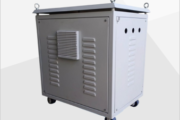



Voltage Stabilizer for Textile Machines is not just another electrical accessory. In a textile unit, it is the difference between smooth production and silent losses that show up only in the electricity bill, rejected fabric, or damaged drives. I still remember a weaving unit that called us after losing three PLC boards in one week. Same machines. Same operators. Only the power was unstable. That moment explained everything.
Textile machines run fast. They start hard. They stop suddenly. And they hate unstable voltage. This is where IGBT-based voltage control becomes important. At Rameshwar Power Control, we see this every day on shop floors, not on paper.
This blog explains how IGBT stabilizers work for textile machines, why they matter, and how to choose the right one for your plant.
Power Problems Inside a Textile Unit
A textile factory looks calm from the outside. Inside, it is electrically aggressive. Motors start under load. Drives pull high current. Air jets, compressors, humidifiers, and control panels all run together. Power demand never stays flat.
Common issues we see:
- Wide voltage swings during peak hours
- Sudden drops when large motors start
- Phase imbalance during grid disturbances
- Spikes during generator changeover
These issues do not trip instantly every time. They quietly stress components. Motors run hotter. Drives misread signals. PLCs reset without warning. Yarn breaks for no clear reason.
If you want to understand how voltage drop affects plants across industries, this guide explains it clearly:
https://rameshwarpowercontrol.com/top-voltage-drop-problems-and-solutions-for-industries/
What Makes IGBT Stabilizer Different
Most people know servo stabilizers. They use a motor and carbon brush. They work. But they react mechanically. That takes time. And time is exactly what modern textile machines do not give you.
IGBT stabilizers work without any moving parts. They use solid-state switching with PWM control. No delay. No hunting. No mechanical wear.
In simple terms:
- Servo stabilizer = mechanical correction
- IGBT stabilizer = electronic correction
This difference shows clearly in high-speed machines.
Why Textile Machines React So Fast to Voltage Change
Textile machines are not like pumps or blowers. They are synchronized systems.
Ring frames depend on steady torque.
Air jet looms depend on compressed air timing.
Dyeing machines depend on steady heater control.
PLC logic depends on clean power.
A 2-second voltage dip is enough to:
- Trip a VFD
- Reset a controller
- Burn a drive fuse
- Ruin a production batch
Many owners blame machines. In reality, the power is the weak link.
Key Benefits of Using a Voltage Stabilizer for Textile Machines
This is where most units see measurable change after installing a proper stabilizer.
- Drives stop tripping during peak hours
- Motors run cooler over long shifts
- PLC faults reduce sharply
- Yarn consistency improves
- Downtime drops
- Maintenance calls reduce
Voltage Stabilizer for Textile Machines also protects during generator operation. Many textile plants shift between grid and DG sets multiple times a day. A fast stabilizer absorbs that transition cleanly.
Inside Rameshwar’s IGBT Static Voltage Stabilizer
Our IGBT Static Voltage Stabilizer is designed for continuous industrial duty. No shortcuts.
Core working:
- Direct AC-AC conversion
- No rectification to DC
- No waveform distortion
- Cycle-by-cycle voltage correction
Performance highlights:
- Output regulation up to ±1%
- Fast electronic correction
- No mechanical wear
- High power factor
- Typical efficiency around 90%
Protection systems:
- Overload cutoff
- Short-circuit protection
- Automatic bypass in case of failure
- Over-temperature protection
- IGBT driving protection
Control and monitoring:
- LCD display
- Digital DSP control
- Alarm system
- Data record function
- Remote interface via Modbus RS-485
- HMI touch panel option
Designed for 24-hour operation:
- 100% continuous duty
- Air-cooled design
- Rated for harsh industrial floors
You can see the full product here:
https://rameshwarpowercontrol.com/igbt-static-voltage-stabilizer/
Applications include:
- Textile machines
- CNC machines
- Food processing
- Laser cutting
- Injection molding
- Printing machines
How to Select the Right Stabilizer Capacity
This is where many buyers make mistakes. They size the stabilizer only on running load. They forget starting current.
Always calculate:
- Total connected load
- Peak starting load
- Diversity factor
- Future expansion
Also decide:
- Individual machine stabilizer or central plant stabilizer
- Indoor or outdoor installation
- Air cooling or special ventilation
If you want a clean step-by-step buying approach, this guide explains it:
https://rameshwarpowercontrol.com/how-to-choose-the-right-voltage-stabilizer-for-factory/
Servo vs IGBT Voltage Stabilizer for Textile Machines
This question comes up in almost every technical meeting.
Servo stabilizer:
- Mechanical movement
- Slower correction
- Regular brush maintenance
- Works for moderate loads
IGBT stabilizer:
- Solid-state switching
- Instant correction
- No mechanical wear
- Best for high-speed and sensitive machines
For modern looms and automated spinning units, the electronic speed of IGBT is the safer choice.
If you want to understand servo stabilizers in detail, this resource is useful:
https://rameshwarpowercontrol.com/what-is-a-servo-voltage-stabilizer/
One Story from the Shop Floor
A weaving unit in western India had steady production loss. Not breakdowns. Just small quality rejections. Yarn breakage increased during evening hours. No clear fault codes.
We monitored the input. Voltage dropped by 14–18% during peak city load. The machines kept running. But the drives operated under stress.
After installing the IGBT stabilizer:
- Breakage dropped within a week
- Drive temperature reduced
- Rejection percentage stabilized
Nothing magical happened. The machine finally got the power it was designed for.
Why Rameshwar Power Control Focuses on Industrial Power
We do not design for showrooms. We design for factories that run 24 hours.
Our work covers:
- Servo stabilizers for CNC machines
- Stabilizers for medical equipment
- Textile machines
- Pharmaceutical plants
- Packaging lines
- Air-conditioning plants
You can see how we approach textile applications here:
https://rameshwarpowercontrol.com/why-stabilizer-for-textile-machines-is-a-must/
And for machine-specific protection:
https://rameshwarpowercontrol.com/servo-stabilizer-for-packaging-machines-keep-production-line-running-smoothly/
We design based on:
- Real loading patterns
- Dust and humidity conditions
- Shift operation cycles
- Generator integration
Installation, Maintenance, and Long-Term Reliability
IGBT stabilizers need less maintenance than servo units. Still, good practices matter.
- Keep proper ventilation
- Avoid dust buildup on cooling paths
- Check alarm logs monthly
- Inspect cable terminations
- Keep bypass system functional
Most failures we investigate are not design failures. They are installation or grounding mistakes.
Where IGBT Stabilizers Fit Best in Textile Units
They give the highest return in:
- High-speed weaving lines
- Export-grade fabric units
- Automated dyeing plants
- Units running multi-shift operations
- Plants with unstable grid supply
If your machines are electronically controlled, power quality is not optional. It is part of machine life.
Final Words
Voltage Stabilizer for Textile Machines is not about avoiding breakdowns only. It is about running machines in the condition they were designed for. Clean power. Stable torque. Predictable control.
IGBT technology removes the mechanical limits of old correction methods. It reacts at electrical speed. That matters in textile production.
At Rameshwar Power Control, everything we build is shaped by what we see on real shop floors. Not theory. Not catalog numbers. Just daily industrial reality.
If your machines are sensitive, fast, and expensive, power quality is not a support system. It is part of your production line.