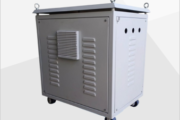



Voltage issues are not too common, and they do not alert you with sparks or ringing. They show up quietly.
A panel trips once a week.
A power supply runs hotter than usual.
A machine behaves fine—until it doesn’t.
This slow degradation is exactly what an automatic voltage regulator is designed to prevent. It sits between unstable supply and sensitive equipment, correcting voltage continuously so damage never gets a chance to build up.
In countries like India, where voltage variation is part of daily operation, regulation is not optional. It is basic electrical discipline.
What Is an Automatic Voltage Regulator?
An automatic voltage regulator is an electrical device that delivers constant output voltage no matter how much the input supply fluctuates.
It works continuously, not occasionally.
An Automatic Voltage Regulator:
- Monitors incoming voltage in real time
- Compares it with a reference value
- Automatically corrects deviations
- Delivers stable voltage to connected loads
The goal is simple: keep voltage within safe limits so equipment operates as designed.
For readers new to voltage control, this foundational article on what a servo voltage stabilizer is helps explain how regulation and stabilization fit into broader power protection.
Why Voltage Fluctuation Is a Serious Operational Risk
Voltage fluctuation is a common occurrence, not an exception. It is a routine condition.
Common causes include:
- Load variation on shared feeders
- Generator start/stop cycles
- Phase imbalance in three-phase systems
- Long cable runs
- Seasonal demand peaks
These problems affect electronics long before total failure occurs. This is explained clearly in top voltage drop problems and solutions for industries, where real-world voltage patterns are discussed.
An automatic voltage regulator is designed to handle daily issues and not just worst-case scenarios.
How an Automatic Voltage Regulator Works (Detailed Explanation)
The principle behind the working of an automatic voltage regulator is that of a closed-loop control system.
1. Continuous Voltage Sensing
The AVR constantly measures the input voltage using sensing transformers or electronic circuits.
2. Reference Voltage Setting
A predefined reference voltage is set based on equipment requirements.
3. Error Detection
The regulator detects the difference between actual voltage and reference voltage.
4. Control Action
Based on the detected error, the AVR adjusts the output using:
- Electronic switching
- Tap-changing mechanisms
- Solid-state control logic
5. Stabilized Output Delivery
The corrected voltage is supplied to the load within acceptable tolerance limits.
This entire process happens automatically and repeatedly—often many times per second.
In industrial environments where correction range and load size increase, systems such as industrial servo voltage stabilizers apply the same principle on a much larger scale.
Types of Automatic Voltage Regulators
All AVRs share similar functionality but not the same construction. Selection depends on application.
Generator-Based AVRs
Used in alternators to maintain output voltage during load changes.
Panel-Mounted AVRs
Integrated into control panels and automation systems.
Electronic AVRs
Solid-state regulators with fast response times for sensitive electronics.
Each type serves a specific role. The wrong selection could lead to poor protection levels.
Where Automatic Voltage Regulators Are Commonly Used
Voltage regulators are employed in various industries where the reliability of supply is influenced by the stability of voltage.
Typical applications include:
- Generator sets and alternators
- PLC panels and automation systems
- Medical equipment
- Telecommunication infrastructure
- CNC control electronics
In hospitals and diagnostic centers, voltage inconsistency can directly impact safety. This is why servo stabilizers for medical and hospital equipment are often deployed alongside regulation systems.
Why Response Time Is Critical
Voltage damage does not wait.
A slow-responding regulator allows spikes and dips to reach components.
A fast-responding system prevents stress entirely.
Modern AVRs focus on:
- Fast sensing
- Microcontroller-based control
- Minimal correction delay
This principle also applies when selecting stabilizers. The checklist in how to choose the right voltage stabilizer for a factory explains why response time matters as much as capacity.
When an Automatic Voltage Regulator Is Not Enough
An automatic voltage regulator corrects voltage levels.
It does not:
- Eliminate electrical noise
- Reduce harmonics
- Provide galvanic isolation
In sensitive or safety-critical systems, voltage regulation is combined with isolation. This is where 3 phase isolation transformers become essential.
System design should be based on electrical risk—not minimum compliance.
Maintenance and Long-Term Reliability
Although AVRs require low-maintenance, their reliability is dependent on:
- Proper sizing
- Correct installation
- Proper ventilation
- Regular checking
Ignoring these basics shortens service life and reduces protection effectiveness.
The same principles apply across all voltage control equipment.
Conclusion
An automatic voltage regulator does not improve performance directly. It protects performance indirectly—by keeping electrical stress out of the system.
Stable voltage:
- Extends equipment life
- Reduces unexplained failures
- Improves operational confidence
Voltage problems are predictable.
Damage is preventable.
Regulation is not an upgrade. It is part of responsible electrical design.