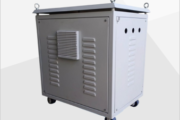


The Servo Voltage Stabilizer for Computer Systems is often treated as an accessory. In real operations, it behaves more like a seatbelt. You do not notice it when things go right. You regret ignoring it when something goes wrong.
I have seen this pattern for years. A control room runs fine for months. Then one evening, the voltage drops for a few seconds. Screens go blank. A motherboard burns. Work stops. The cost is not just the part. It is lost data, lost time, and people asking why no one planned for this.
With this in mind, this blog targets computer system manufacturers and operators who face voltage risks daily—not in theory, but in real environments with real challenges.
Why voltage instability hurts computer systems quietly
Computer systems often fail quietly without visible signs—just gradual damage over time.
SMPS units heat up. Capacitors age faster. Boards become unreliable. One day, the system refuses to boot.
In India, voltage is rarely steady. We see dips in the afternoon. Spikes during load switching. Phase imbalance in shared lines. If you want to understand how common these issues are, this guide on top voltage drop problems and solutions for industries explains it clearly.
UPS systems help during outages. They do not correct the incoming voltage continuously. That gap is where stabilizers matter.
What an air-cooled servo stabilizer really does
A servo stabilizer does one job. It keeps the output voltage within a narrow band, even when the input keeps moving.
Air-cooled models use natural or forced air instead of oil for cooling. That makes them cleaner and easier to place near sensitive equipment. No oil. No leakage risk. No smell. No special containment.
For computer systems, this matters. These machines live indoors. Often next to people. Often in sealed rooms.
If you want a basic technical foundation, this article explains what a servo voltage stabilizer is in simple terms.
Servo Voltage Stabilizer for Computer Systems: When 3 Phase Becomes Necessary
Single computers may run on a single phase. Entire systems rarely do.
Server rooms. CNC control PCs. Industrial HMIs. Office IT floors. These setups draw power across three phases. Load is dynamic. One rack spikes. Another idles.
A Servo Voltage Stabilizer for Computer Systems in 3 phase configuration keeps all three lines balanced. That balance protects equipment that depends on phase symmetry, not just voltage value.
I have seen operators try to manage this with multiple single-phase units. It creates more problems than it solves. One phase corrects faster. Another lag. Systems behave unpredictably.
How a Servo Voltage Stabilizer for Computer Systems Protects Real Operations
Think of voltage like water pressure. Too low, machines starve. Too high, pipes crack. Computers are thin pipes.
A servo stabilizer adjusts voltage in real time. Response time below 10 milliseconds matters here. It is faster than human reaction. Faster than damage.
At Rameshwar Power Control, we design these systems with microcontroller-based True RMS sensing. That matters when loads are nonlinear, which computer systems always are.
Protection features are not add-ons. They are daily safeguards.
- Input over- and under-voltage cut-off stops damage before it starts.
- Output over- and under-voltage protection isolates the system.
- Single phase prevent avoids uneven stress
- Overload cut-off handles unexpected surges.
- Adjustable trip delay avoids nuisance shutdowns.
All settings are handled through a keypad. No potentiometers. No trial-and-error tuning.
Built for computer systems, not just connected to them
We manufacture 3 Phase air-cooled servo voltage stabilizers from 10 KVA to 100 KVA. These units are built using consistent components across capacities. One common control card. Same logic. Same reliability.
This matters during maintenance. It matters during upgrades. And it matters when systems scale.
Specifications are not marketing numbers. They exist for a reason.
- The input range from 340 V to 480 V handles poor grid conditions.
- Output options of 380 / 400 / 415 V fit different system designs.
- Output regulation within ±2% protects sensitive electronics.
- Efficiency above 97% keeps the heat low in enclosed rooms.
If you manage environments like hospitals or labs, you may have seen similar requirements explained in this guide on servo stabilizers for medical equipment.
Computer systems demand the same discipline.
Where these stabilizers are actually used
People often associate servo stabilizers only with machines. In reality, machines are now computers with motors attached.
We see computer-driven systems in:
- CNC turning centers and machining centers
- Wire-cut machines with precision controllers.
- Pharmaceutical production lines
- Engineering and plastic industries
- Malls and showrooms with centralized IT systems
If you work around CNC equipment, this article on air-cooled servo voltage stabilizers for CNC turning centers shows how closely computers and power quality are linked.
Choosing the right stabilizer for your computer system
Do not size stabilizers only by connected load. Consider starting currents. Consider future expansion. Consider the duty cycle.
Indoor or outdoor installation changes the cabinet design. Generator compatibility changes control logic. Phase imbalance history changes capacity planning.
This practical checklist on how to choose the right voltage stabilizer for a factory applies equally well to large computer systems.
And if isolation is also required, pairing stabilizers with isolation transformers can help. This guide on 3 phase isolation transformers explains when that makes sense.
Why manufacturers and operators work with us
We do not design stabilizers for catalogs. We design them for sites that run all day.
At Rameshwar Power Control, our experience comes from breakdown calls, voltage logs, and field feedback. That is how features evolve. That is how failures are reduced.
Customization is not about changing paint color. It is about matching electrical reality.
Conclusion
Computer systems fail slowly when voltage is ignored. They last longer when power is controlled.
A Servo Voltage Stabilizer for Computer Systems is not insurance. It is infrastructure. Like cooling. Like grounding. Like the layout.
If you design, operate, or maintain computer-driven systems, stable voltage is not optional. It is part of doing the job properly.
And that is the difference between reacting to failures and preventing them.
Looking for a Servo Voltage Stabilizer for Computer Systems? Get in touch with us to plan the right solution for your application.