


Introduction
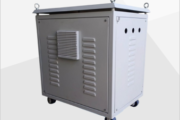
Voltage Stabilizer for Food Processing Machines is not just a technical term. It’s a real need inside every food plant. When I visit food units – small snack factories, dairy plants, namkeen units – I see the same issue again and again. Machines stop midway. Motors heat up. Packing lines freeze. And nobody understands why it happens so often.
Most of the time, the actual problem is simple. Voltage is not stable enough for the machines you use. Food processing equipment needs steady power. Even a small voltage dip can spoil a batch, affect texture, slow down production, or damage sensors.
This is where an IGBT Static Voltage Stabilizer makes a clear difference. And at Rameshwar, we work with industries daily, so we understand how your machines behave under fluctuating loads.
Why Food Plants Prefer an IGBT Static Voltage Stabilizer
When I explain IGBT stabilizers to plant owners, I keep it simple. Traditional servo stabilizers work well, but they have moving parts. That means they react more slowly. And food plants have fast-moving machines – mixers, grinders, filling lines, refrigeration systems.
An IGBT static stabilizer works like a steady hand holding a cup full of hot tea. No matter how much someone shakes the table, the hand adjusts instantly and keeps the tea from spilling. That’s how voltage correction should work.
There’s no noise, no delay, and no mechanical wear. Just a fast correction.
You may have seen our guides on how stabilizers help other industries, like textile and pharma:
Food machines face similar issues. But the financial loss per minute is even higher.
Voltage Stabilizer for Food Processing Machines – What Makes the Load Different
Food plants run different types of loads at the same time:
- Heavy motors
- Heaters and drying units
- Conveyors
- Refrigeration
- PLC-based automation
- Sensors and weighing systems
- Induction-based sealing and packing lines
And each of these reacts differently to voltage swings.
I still remember a dairy plant owner telling me, “My homogenizer runs fine in the morning. But in the evening, the motor behaves like it’s dragging a weight.” There was nothing wrong with the machine. The local supply dipped by 18% during evening load hours. Once we installed a stabilizer, his machine ran the same at all times.
If voltage changes like the weather, consistency always suffers. Food processing does not allow that freedom.
How an IGBT Static Voltage Stabilizer Works
Here’s how it works, in simple words:
1. It senses the input voltage continuously.
2. When the voltage changes, the IGBT module reacts instantly.
3. It adjusts the output to a stable, accurate value.
4. Your machine receives the same voltage all day.
There are no motors inside. So there’s no friction. No wear-out. No delay.
If you want to understand stabilizer basics, you can read our guide:
What Is an Industrial Stabilizer and Why Does Business Need It?
Choose the Right Voltage Stabilizer for Food Processing Machines
When industries ask me, “What size stabilizer do we need?”, I follow a simple method.
I check:
- Total connected load
- Starting load of motors
- Continuous vs intermittent load
- Voltage conditions in the area
- Sensitivity of equipment
- Peak-time voltage drop pattern
Food plants often run multiple motors together, so their power profile is uneven. That’s why selecting the right KVA matters.
A wrong capacity stabilizer behaves like a weak shoulder trying to lift a heavy sack.
If you want to explore stabilizer selection in detail, you can read:
How to Choose the Right Stabilizer for a Factory
This section also includes your focused keyword again naturally.
Why Food Machines Need Fast Voltage Correction
Food machines do not forgive mistakes. A short voltage dip can ruin texture, timing, or temperature – all three are critical in this industry.
Common issues I see in food plants:
- The packaging line speed drops suddenly
- Motors heat up even with normal loads.
- Automatic weighing systems misread
- Heaters overshoot due to low voltage.
- Refrigeration compressors fail under stress.
- PLCs reboot without warning.
- Batch quality becomes inconsistent.
These problems are not “machine faults.” They are “voltage faults.”
You can also refer to our article on voltage drop problems:
Top Voltage Drop Problems and Solutions for Industries
When the voltage stays stable, machines behave like they should.
Features of Rameshwar’s IGBT Static Voltage Stabilizer
We design stabilizers for real industrial conditions. That means heavy loads, long hours, and challenging voltage profiles.
Key features include:
- Direct AC-AC conversion without rectifying to DC improves the efficiency, reliability & reduces the components.
- Rapid cycle-by-cycle correction of output.
- Output regulation of +/- 1% which is impossible in a conventional stabilizer.
- No distortion in output waveform.
- Overload cutoff and short circuit cutoff
- Automatic bypass in case of failure.
- An LCD display for displaying all parameters and your company name.
We have worked with multiple food units—from dairy to frozen food—so we understand the load behavior well.
Where We See the Stabilizer Used in Food Plants
Some real examples:
- Chikki and namkeen plants
- Cold storage
- Bakery production
- Rice mills
- Dairy homogenizers
- Spice grinding units
- Ready-to-eat food lines
- Packaging and sealing machines
One owner of a potato chips unit told me after installation, “My fryer does not fluctuate anymore. The color stays the same.” That’s the impact of stable voltage – small but critical.
Conclusion
A Voltage Stabilizer for Food Processing Machines is not just another electrical box in your plant. It protects your production line, keeps your machines running smoothly, and avoids unnecessary losses. And when you use an IGBT static stabilizer, the correction becomes fast and accurate enough for sensitive food processing equipment.
At Rameshwar Power Control, we build stabilizers that match the real voltage conditions industries face every day. If your food plant deals with voltage issues. We can guide you and help you select the right model for your machines.
Contact us and tell us about your industrial setup. Our team will guide you with the right solution.
📞 +91 88666 65036
📞 +91 98248 12053