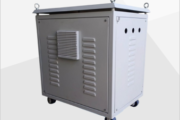



Industrial Voltage Drop Issues represent the most significant electrical problems which industrial facilities and manufacturing plants and hospitals and textile factories and CNC workshops and heavy industrial operations need to resolve. The industrial electrical system experiences operational problems when voltage drops because it causes equipment to use more energy and motors to overheat and production operations to stop working.
Stable voltage supply functions as the essential operational requirement which modern industrial facilities need because they operate their automation systems and PLC panels and CNC machines and robotics and HVAC systems and heavy-duty motors continuously throughout the day.
The Industrial Voltage Drop Issues demonstrate their potential to inflict severe damage on expensive machinery because they begin with only a basic voltage variation which gradually interrupts the entire operational process of the facility.
This guide provides complete information about Industrial Voltage Drop Issues through its coverage of all causes and effects and calculation methods and permanent solutions to solve them.
What Are Industrial Voltage Drop Issues?
Industrial Voltage Drop Issues occur when electrical voltage decreases between the power source and the load due to resistance in cables, conductors, transformers, or electrical connections.
The basic explanation states that The basic explanation states that The basic explanation states that electricity traveling through cables results in voltage loss because of conductor resistance. The voltage drop increases when the current flow through a cable increases and the cable length increases.
Voltage drop occurs in industrial environments through the following two paths:
- Between the transformer and main distribution panel
- Between panels and machinery
- During motor starting
- Under peak load conditions
Most industrial electrical standards recommend keeping voltage drop within 3% to 5%. Anything beyond that range can cause serious operational problems.
Why Industrial Voltage Drop Issues Occur in Factories
The first step for solving Industrial Voltage Drop Issues requires factories to discover their fundamental cause.
1. Long Cable Lengths
The power distribution systems in large factories extend across their entire facility through their extensive electrical networks. The greater the cable length, the higher the resistance and voltage loss.
2. Undersized Conductors
The main reason which leads to industrial voltage drop problems occurs when people choose incorrect cable dimensions for their electrical systems. The electrical resistance of a cable increases when its cross-section becomes smaller than the load current requirement.
3. High Motor Starting Current
Heavy industrial motors draw 6–8 times their rated current during startup. This sudden surge creates temporary voltage dips that affect nearby equipment.
4. Low Power Factor
Low power factor increases current flow in the system. Higher current means greater voltage drop. Installing capacitor banks can help reduce this issue.
5. Poor Electrical Connections
The presence of loose terminals and corroded joints and improperly crimped connections creates increased resistance at connection points which causes Industrial Voltage Drop Problems.
6. Transformer Underrating
If the transformer capacity does not match the total load demand, system voltage instability is unavoidable.
Effects of Industrial Voltage Drop Issues on Equipment
Industrial Voltage Drop Issues can have serious consequences if ignored.
Reduced Motor Efficiency
When voltage drops, motors lose torque and draw more current to maintain output. This results in overheating which damages the insulation.
Increased Energy Bills
Lower voltage increases current demand, which results in higher energy consumption and increased electricity costs.
Frequent Machine Tripping
CNC machines and PLC panels and automation systems lose their operational capacity because of voltage fluctuations.
Shortened Equipment Life
Continuous voltage fluctuations stress windings, electronic components, and control systems.
To better understand how voltage regulation systems help stabilize industrial power, you can read: What is a Servo Voltage Stabilizer?
How to Calculate Voltage Drop in Industrial Systems
Key factors affecting Industrial Voltage Drop Issues include:
- Cable length
- Conductor material (Copper or Aluminum)
- Load current
- Power factor
- System voltage
If calculated voltage drop exceeds acceptable limits, corrective action must be taken immediately.
For deeper insights into common voltage-related challenges and practical fixes, refer to: Top Voltage Drop Problems and Solutions for Industries.
Industrial Voltage Drop Issues Across Different Industries
Textile Industry
Textile machinery requires stable voltage for consistent fabric quality. Even small voltage drops can disrupt production cycles.
Related solution: Servo Voltage Stabilizer for Textile Machines Industries.
Hospitals and Medical Equipment
Medical imaging systems, ICU machines, and laboratory equipment demand constant voltage. Industrial Voltage Drop Issues in hospitals can risk equipment malfunction.
CNC and Manufacturing Units
CNC machines and automation systems are extremely sensitive to voltage dips and imbalance. Isolation transformers and stabilizers are often used to eliminate Industrial Voltage Drop Issues.
How to Fix Industrial Voltage Drop Issues
Now let’s discuss practical and proven solutions.
1. Proper Cable Sizing
Always calculate cable cross-sectional area based on:
- Load current
- Distance
- Permissible voltage drop percentage
Slightly oversizing cables can prevent future problems.
2. Install Servo Voltage Stabilizers
Servo voltage stabilizers automatically correct voltage fluctuations and maintain stable output. They are one of the most effective solutions for Industrial Voltage Drop Issues.
Understand industrial stabilizer applications here: What is an Industrial Stabilizer and Why Does Business Need?
3. Improve Power Factor
Installing capacitor banks reduces current demand and minimizes voltage drop.
4. Use Isolation Transformers
Isolation transformers protect sensitive equipment and improve voltage stability by isolating electrical noise.
5. Reduce Cable Length
The optimized panel placement design decreases conductor length which results in decreased voltage loss.
6. Upgrade Transformer Capacity
The transformer rating needs to match the maximum load requirements of the system.
Preventive Maintenance to Avoid Industrial Voltage Drop Issues
The most effective way to handle problems requires people to choose preventive measures instead of fixing things after they break. The following best practices should be observed:
- Conduct annual electrical audits
- Perform thermal scanning
- Tighten electrical connections regularly
- Monitor voltage at load points
- Balance loads across phases
- Upgrade aging conductors
The implementation of these strategies enables organizations to decrease industrial voltage drop problems while enhancing their operational reliability.
Real Industrial Example
A mid-sized manufacturing unit was facing:
- 6% voltage drop
- Frequent motor overheating
- Production interruptions
After conducting an audit, they:
- Upgraded cable size
- Installed a three-phase servo stabilizer
- Corrected power factor
Results:
- Voltage drop reduced to 2.8%
- Energy savings improved
- Equipment downtime minimized
Industrial Voltage Drop Issues turn into major electrical problems because they decrease efficiency while reducing productivity and shortening equipment lifespans.
Conclusion
Industrial Voltage Drop Issues are not minor electrical losses—they directly impact efficiency, productivity, and equipment lifespan. Whether you operate a textile plant, hospital, CNC workshop, pharmaceutical unit, or heavy manufacturing industry, maintaining stable voltage must be a top priority.
By combining:
- Proper cable sizing
- Voltage stabilizers
- Isolation transformers
- Power factor correction
- Preventive maintenance
The process of maintaining industrial operations without interruptions can be achieved through the elimination of industrial voltage drop problems.
The maintenance of stable voltage levels leads to consistent production processes which result in enhanced profit margins.